
The chemistry of speculoos spice, from β-caryophyllene to cinnamon’s bite
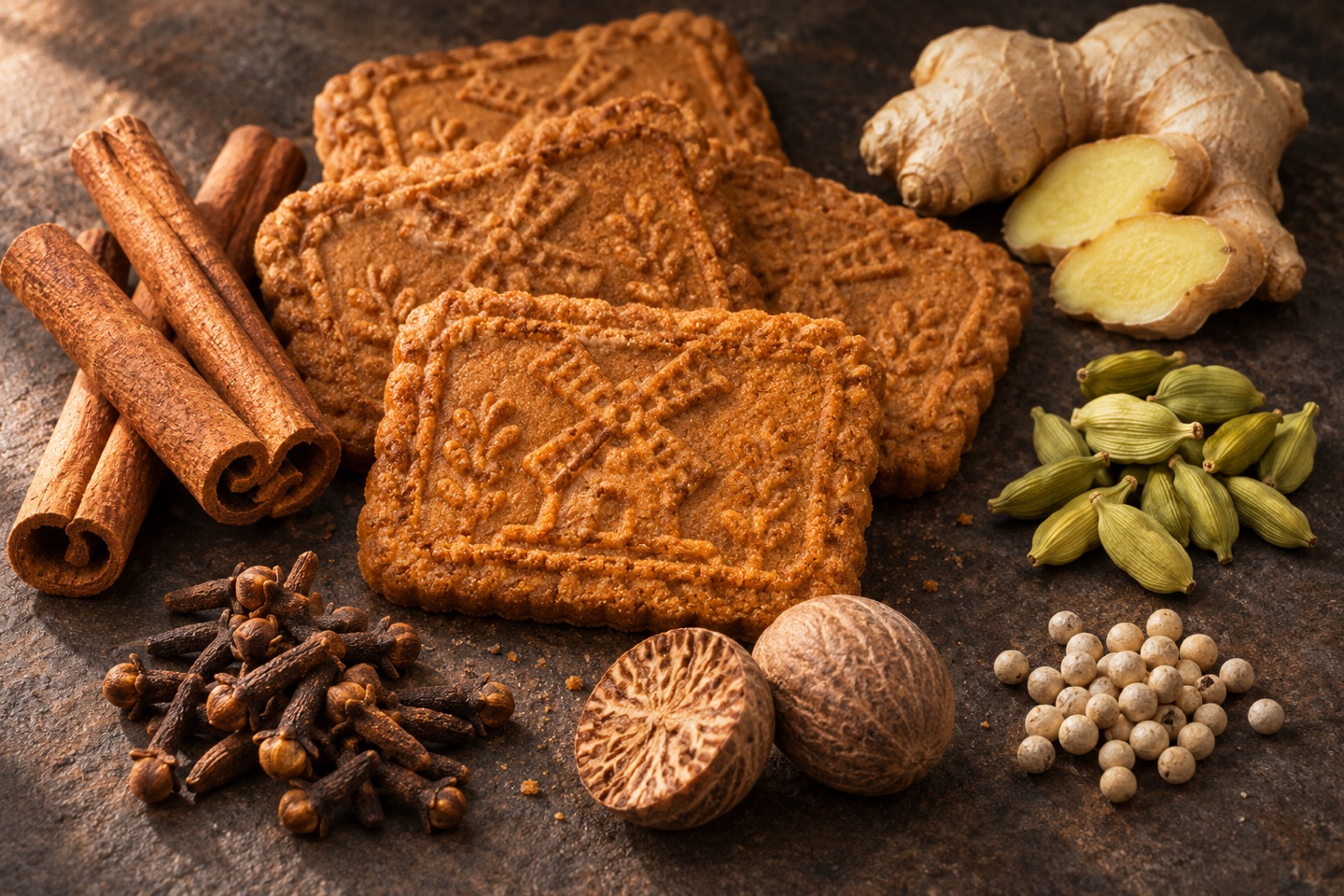
Cinnamon is usually the first thing you smell when you break open a speculoos biscuit. Clove adds depth.
Some blends also include nutmeg, ginger, green cardamom, and white pepper. I’m β-caryophyllene (beta-caryophyllene, or BCP), a peppery terpene found in cinnamon bark and cloves, the two spices in the Belgian recipe attributed to Maison Dandoy. White pepper can bring more of me to a Dutch-style blend. Dandoy recipe · Cinnamon and clove chemistry · White pepper chemistry
What BCP does in the body
I activate CB₂, a cannabinoid receptor involved in immune signaling. In laboratory experiments, I changed signaling in human monocytes, a type of white blood cell. In mice, oral BCP reduced experimentally induced inflammation when the animals had working CB₂ receptors. Mice lacking the receptor showed no such response. Read the CB₂ study
In a small trial involving 66 people with Helicobacter pylori infection, the group taking 126 mg of BCP daily for eight weeks reported less nausea and upper abdominal pain. One inflammatory marker, IL‑1β, also fell. The infection persisted. How much BCP survives baking and reaches your bloodstream from a serving of speculoos remains an open question. Read the human trial
What the other spice compounds do
Cinnamon and clove. Cinnamaldehyde and eugenol give these spices much of their signature aroma. Both are phenylpropanoids that activate TRPA1 in laboratory experiments. This sensory ion channel helps detect pungent chemicals, which helps explain why spice has a bite you can feel as well as smell. Cinnamaldehyde study · Eugenol study
Nutmeg and white pepper. Nutmeg contains sabinene, α-pinene, β-pinene, and limonene. White pepper shares several of those terpenes. Their clearest role in the biscuit is to contribute aroma. Nutmeg oil analysis · White pepper oil analysis
Ginger. α-Zingiberene, β-sesquiphellandrene, and β-bisabolene are characteristic ginger terpenes. A placebo-controlled trial found that a whole ginger extract reduced pregnancy-related nausea. The study leaves open which compounds contributed to the effect. Ginger oil analysis · Ginger extract trial
Green cardamom. 1,8-Cineole brings a eucalyptus-like note. Cardamom also contains α-terpinyl acetate and linalool. A placebo-controlled asthma trial reported improvements in lung function and symptoms when patients took purified cineole at 200 mg three times daily alongside their usual treatment. Those findings apply to the studied dose and formulation. Cardamom oil analysis · Cineole trial
When you take a bite of speculoos, you can experience its aroma and pungency immediately. Finding out whether I change CB₂ signaling at that serving size would take measurements in the baked biscuit and a study of how people absorb me from it.